Thursday, September 24, 2015

An Interesting Day in the District of Patapo


When Josè, a high school classmate of Maribel’s and a surgical nurse at a Chiclayo hospital phoned earlier this week and said there were some schools and other things we might be interested in seeing in the Patapo District, it sounded intriguing so we agreed to go.
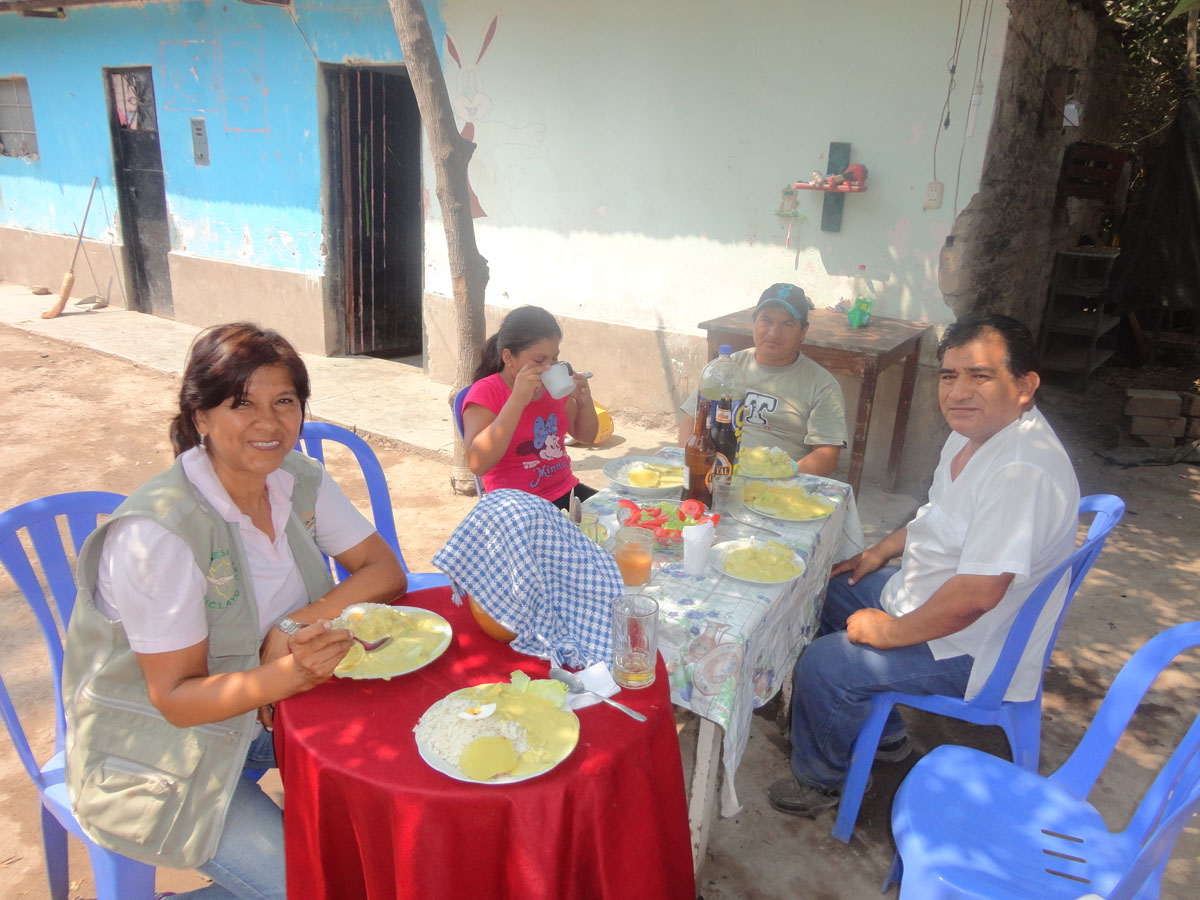
Our first stop was at the home of Josè’s friend Jesus where we chatted for awhile and had lunch before boarding a mototaxi to the village of Las Canteras. Jose is on the right.

Unlike most villages in the area, the economic base of Las Canteras is a mix of agriculture and a commercial rock quarry. Las Canteras in Spanish means ‘the quarries’.  There isn’t much to the town. There is one main road which sees a steady stream of dump trucks coming and going. As a result there is a constant thick blanket of white dust in the air that coats everything that doesn’t move. We were told we could not enter the quarry area for safety and security reasons. 

Kinder #443 is a happy, cheery and friendly school. School director Silvia Aguero is a personable woman and very competent administrator. Her school is well furnished and equipped. This year she used her $625 annual budget to construct two new restrooms and make repairs to the classroom.

We were told that over time the parent’s association provided the cooking equipment and furniture for the kitchen. The equipment, cleanliness and organization of the kitchen were impressive but the real eye-opener for us was the three-burner, two-tank semi industrial stove behind the girls. It was provided by the QaliWarma government food program.

Nearly every school we’ve visited in the past two months has asked for a stove, telling us that the government does not provide them. We did some hurried research upon arriving home and learned that as of May 2015 the QaliWarma program has been delivering stoves nationwide. The goal is to provide 19,260 in total. So far the Lambayeque Region has received 383 stoves of 1380 earmarked for the region. Somehow the kinder in Las Canteras got one of them. We don’t know what the qualifying criterion is.

This is strictly a guess on my part, but I’d estimate that 1380 stoves would amount to about 25% of the schools in the region, and that is if they were all delivered which they probably won’t be. National programs typically begin and end with the standing President. Ollanta Humala’s term ends next July and it is likely that QaliWarma will either cease to exist or change its name, vision and goals.

Though Silvia told us she doesn’t need anything for the classroom, she did ask if she could call on us next March to help the kids with school supplies. She explained that the quarry was not steady work…that the workers were called on a day to day basis and many families struggled financially.

If the kinder in Las Canteras was a pleasant surprise, the pronoei in Posope Alto located just two miles from Las Canteras was the opposite. Jose had warned us that it was “deplorable” and if anything he understated the situation.

The furniture consists of a collection of broken plastic stools and chairs and two tables. The school had closed for the day when we arrived. A neighbor we talked with told us there are 23 students registered but only 14 attend because of the poor conditions. She told us to go in, that the door wasn’t locked because ‘there’s nothing inside to steal’. We’ll be back in the area next week for different reasons and will make a point of stopping at the pronoei to talk with the teacher.

From Posope Alto we returned to Jesus’s house to take part in a fruit gathering expedition. I learned a lot about the sugar cane business by asking questions while stumbling and crawling through a sugar cane field. 

Starting from scratch, first the sugar cane plants are planted. In a year’s time the first harvesting is done. In northern Peru sugar cane is not seasonal, so someone is always planting or harvesting and the processing plants work year-round. Jesus harvests his fields in early October. On October 15th he sets the field on fire to burn the stubble. He said the fire does not harm the plants, and the reason he does it is to drive out snakes. After the fifth year he plows the field and plants new plants. He said there are no profits the first year – the cash received pays off expenses. Two months prior to harvesting he signs a contract to sell at an agreed upon price to the processing plant. The price does vary from year to year based on demand.

It was an interesting and entertaining day in the Patapo District. We made one other stop but that will be the subject of an upcoming post.

Monday, September 21, 2015

It was sort of like a Holiday in Sapamè…


…at least that’s what it felt like when we arrived at the village this morning. Some of the older kids began unloading the things we’d brought – a stove, pots, storage shelves, cups and plates before we even stepped out of the mototaxi.

I don’t know if it was the change in their school day, the excitement in the air or what but we’ve never seen kids so excited about non-toy things before. There were oohs and aahs as each item was unwrapped and not just from the kids.

Parents didn’t waste any time in tackling the job of assembling the six storage shelves. The first one was difficult as they couldn’t agree on the spacing of the shelves but once that was decided the rest went quickly with teachers and kids helping. 

The village women had prepared a delicious lunch of rice with duck. The kids usually eat lunch at home but today they all ate at the school and used their new cups and plates. With the new stove eating at school will become the norm.

What we didn’t take with us was the tables and chairs the director Alcira Romero had requested, because we had previously agreed that Alcira would take responsibility for contacting a carpenter friend to hopefully get a discounted price. She will do that soon and let us know what she learns.

Once again we need to thank Chris R., the Alice Cool Foundation and Clif Brown for helping the people of Sapamè and other villages. You folks have accomplished quite a lot in the Tùcume District.

Tuesday, September 15, 2015

Oh Rats!!... or, I Was Having a Slow Morning


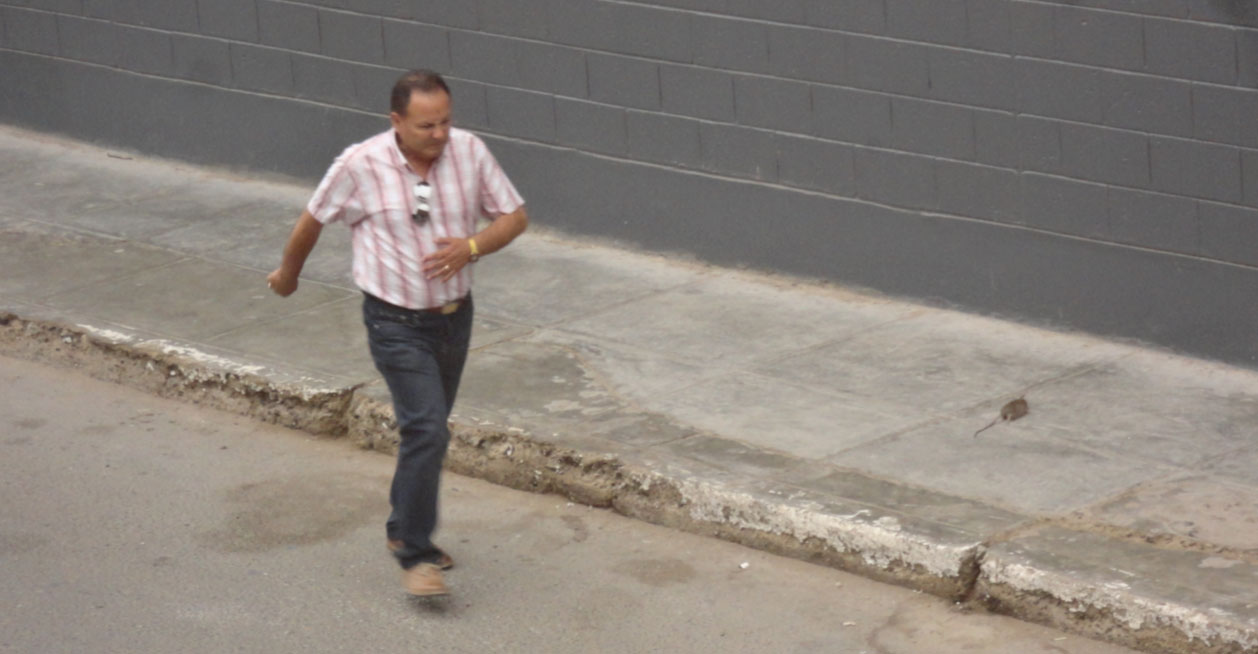
This is a post about Chiclayo rats or, more specifically about people’s reactions to a single, stationary lacking-vital-life-signs rat.

To my knowledge rats are not a problem in Chiclayo. In over eight years of walking the streets I have seen maybe three rats. That’s not to say there aren’t rats in Chiclayo. There are several canals that run through the city that are not well maintained. People throw garbage into them and shrubbery of all sorts grows in them. Occasionally the city will divert the water and clean the canals but it’s not long before they revert to a raw condition. Rats live and breed in these canals. Sometimes young boys with nothing better to do can be seen with sticks chasing rats. The rats usually win.

Perhaps that is where this rat came from. I don’t know the circumstances of its demise…whether it was killed or just happened to die in the middle of the sidewalk, but there it was when I woke up this morning. Dogs roam the streets during the day but I doubt if they would mess around with a rat. Cats take over the streets at night and it is likely that one or two cats came across this rat either dead or alive. Perhaps all those cartoons I watched as a kid are wrong…maybe cats don’t eat rats.

Anyway, I was curious to see how Chiclayanos would react to the unfortunate creature, so settling at a window with coffee and camera I attempted to document their reactions.

About a third of the people stayed on the sidewalk and ignored the rat, some men even nonchalantly stepping over it, though most of them walked to one side. Those in this group tended to be older people.

Another third thought it prudent to get off the sidewalk. This group was evenly divided between men and women; old and young. 

Some weren’t sure what to do so contemplated the situation for a moment…from a safe distance.

Of course it goes without saying that you never…ever push a person in a wheel chair over or near to a rat.

The remaining third was the fun group…their reaction to the rat was not nonchalant. Perhaps I’m being sexist, but in this group as I expected women’s reactions were generally more animated than men’s. The panic reaction was mostly limited to younger women...
  

…though men were not immune to it.
Did you ever wonder why our hands fly to our face when we’re startled? I never thought about it until I noticed that I had three photos of women doing that. 

I call this the whoa reaction, where you stop and take a step back while trying to get your wits together. Apparently dogs react the same way.
The woman on the left is in a really serious whoa reaction.  I was too late with my camera to catch the double whoa when the woman on the right saw the rat.

I kept expecting a man to come along and kick the rat into the street. That’s what I would have done. I looked out the window just now and see that someone has moved the rat against the building. I wonder why they did that instead of into the street.

I don’t know what I’ll do this afternoon. Perhaps something even more exciting like trying to capture on video what I call the ‘dance of the plastic bags’. See, there’s usually a strong breeze in the street and it picks up the bags and swirls them around almost like a ballet, and…….

Sunday, September 13, 2015

A Return Visit to Las Salinas Norte


We were in Las Salinas Norte last June at the invitation of the pronoei school. Last Friday's visit was requested by Patricia Gil, the director of the primary school.

Patricia has been at Las Salinas Norte less than a year, having taught previously at a school in Morrope. Patricia is ably assisted by Las Salinas 15-year veteran Presentacion Bernilla who has been teaching for over 35 years and has thoughts of retirement but says he will “stay around until Patricia is settled in”.  Patricia teaches grades 1 through 3 with 8 kids while Presentacion has 16 kids in grades 4 through 6.

The school is reasonably well maintained and equipped and has a surplus of furniture. Presentacion told us there were more students in the past but some of them transferred to the school in Sapamè when the additional classrooms were built three years ago. We suggested that Patricia talk with her counterpart in Sapamè to see if some of that surplus furniture could be transferred to Sapamè but were told that district authorities would need to get involved with a property transfer. School supplies are not a problem, and most of the kids have formal school uniforms, something not often seen in these outlying villages.

One of the reasons Patricia called us was to ask for help with the noon lunch program. As I’ve mentioned in previous posts, requests for bottled gas stoves and kitchen equipment have become common. Qali Warma is the name of the national food program run by the Minister of Education in Lima. Recently representatives of Qali Warma have been visiting schools in villages throughout Peru, stressing proper food handling and preparation. They are providing picture posters and instructions but not the means to implement the program. Patricia and Presentacion have asked Promesa Peru for a stove. Surprisingly, they said they had kitchen equipment, but would like two storage shelves to hold that equipment.

A more immediate concern and the primary reason Patricia called us is that they can’t get water from their well. The well was dug in 2003 with funds from a charity that no one remembers the name of. The parent’s association built the structure over the well. At that time a rope with a bucket on the end was wound around a cylinder and water was gotten by manually turning the cylinder. One year ago Tùcume District authorities added an electric pump, a water holding tank, and underground pipes to the school’s restrooms and several water faucets on the school property.

Recently the pump stopped working. None of the village men have the knowledge to diagnose the problem or make repairs. We were told that an appeal for help in Tùcume resulted in being told that, “there is no money because the former mayor absconded with all the money” - an amusing twist to a common theme. There is no visible water in the well so reverting to the bucket system won’t work. We have been asked to help resolve the problem.

Sometimes we're not sure what our role in a community should be. Water and electricity are basic needs. District administrators should be held accountable for providing them, but if it doesn’t happen…then what? The charity that dug the well in 2003 (an expensive project in the desert) apparently decided that taking on the responsibility for water was the right thing to do.

What we’ve decided to do is donate two storage shelves and a gas stove with gas tank. That will cost about $200 including transportation. We also want to contract an electrician from Tùcume to go to the village to identify the problem with the well. We have no idea what that will cost but it can’t be much…maybe $35 - $50. When we know what the problem is and what it would cost to fix it we’ll decide what to do about it. If you’d like to help with this project please visit the Promesa Peru webpage. Thank you.

Wednesday, September 9, 2015

The Village of Sapamè


Sapamè is located about 25 miles north of Chiclayo in the Tùcume District. It’s an old village dating back over 100 years. The origin of the village’s name is lost in the past, though most agree that it probably came from the nearby Sapamè Mountain. There are 40 families here, all earning a living in agriculture. Like most small villages, the people who work the fields don’t own them... they’re paid a modest wage to tend and harvest the mostly corn and grain fields surrounding the village.

Juan Valdera has lived all of his 84 years in Sapamè. He’s seen good and bad times. He has never been rich but has earned enough to get by. He’s watched helplessly as the weather phenomena El Niño ravaged the village, the last time in 1998. The high water lines from that flood are evident on the school behind him and on his house to the right. Juan is worried about the forecasts for a severe El Niño this year, predicted to begin next month. During the normal rainy season the ditch he is pointing to fills with water. To get to school the kids most walk across a slippery log. He has urged the parent’s association to build a bridge but can’t seem to get anyone interested in the project.

Some years ago when the need for a school in the village became apparent Juan donated part of the lot his house occupies to the district to build a school. An adobe building was constructed and when it became overcrowded three years ago two more classrooms were built on the property. With the additional space more students were brought in from surrounding villages and crowding is once again a problem.

Alcira Romero (woman on the right) has been both director and teacher for the past year, coming from the town of Salas far to the north where we were invited to visit several months ago but haven’t yet found the time. Alcira has 11 kids in grades 3 through 6 while Maria (white blouse center) teaches 16 in grades 1 and 2. The third classroom is a kinder with 21 kids taught by Celinda (orange blouse left). The man is Juan.

When asked how Promesa Peru could help them, Alcira spoke for all three saying that they would like a new classroom. Like Juan, they justifiably fear that the next flood will bring down the old building. Other items they asked for are 6 storage shelves, 2 tables with 8 chairs and, for what has fast become a standard request, a gas stove with 2 pots and serving spoons plus plates, cups and utensils for the students.

We don’t think we can help with the building of a bridge for Juan or a new classroom, but the rest of it is doable and we believe would improve the quantity and quality of classroom time. The shelves, tables with chairs and kitchen equipment would cost about $400. Please consider helping us with this project. A donation of any amount will help. Thank you.

Tuesday, September 1, 2015

A Reunion to Remember


The Karl Weiss school held its annual celebration this past weekend. It is always a huge three day affair with the main activity being a Sunday parade on Balta Ave beginning at the Plaza de Armas with any and every school and organization invited to attend and march. Each group marches past a reviewing stand where dignitaries judge the appearance of each unit within various categories. There is about four hours between the first and last unit reaching the reviewing stand. The prior Friday and Saturday are filled with evening concerts/entertainment, classroom reunions at the school with retired professors conducting mock teaching sessions and making speeches, and individual graduating classes having parties throughout the city.

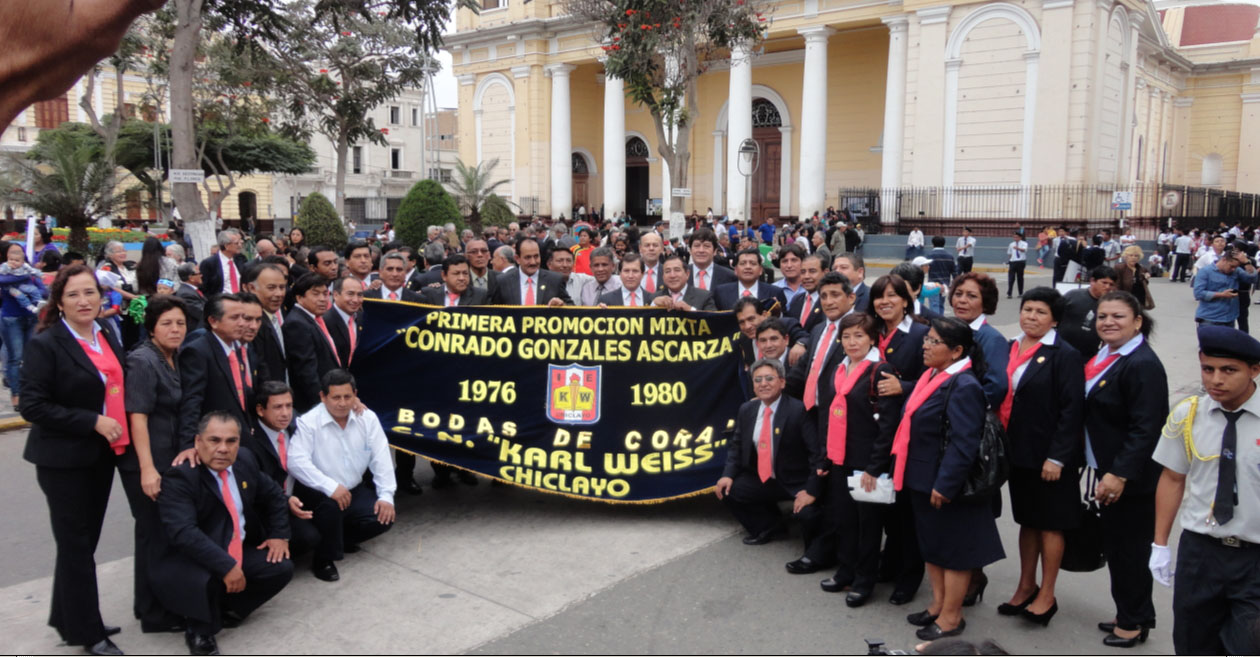
This year’s event marked the 54th year of the school’s existence but it was much more than that for one of the alumni classes. Thirty-five years is a milestone number for anniversaries, and members of the 1980 graduating class – Maribel’s class had been working feverishly for several months to prepare. Hundreds of hours beginning last January were spent locating and contacting former classmates and in meetings to decide on clothing and accessories to be worn, travel logistics, hotel arrangements, selecting restaurants and food choices, and the hundreds of other details that need attention. But as usually happens, despite some last-minute frantic moments it all came together.

A number of people flew in to Chiclayo or arrived by bus on Sunday morning just prior to the parade. Many were from Lima and other cities in Peru; some from Argentina and Chile. Some of these folks had not seen each other since graduation thirty-five years ago and there were laughter and tears when greeting each other. The shirts, blouses, ties, scarves and gold pins were custom made for this occasion. The ties and scarves bore a “class of 1980” logo.

It was impossible to get a photo of all fifty members marching, or of the tears some of them were shedding, or of the pride on everyone’s face. Several people described to me afterwards an intense ‘tingling’ feeling as they marched.  

After the parade the group assembled for lunch, casual talk and dancing at the restaurant Perla de las Flores, a popular place for large parties. Food choices were arroz con pato or cabrito. Both were delicious as were the finger foods and cakes.

The weekend culminates with a massive outdoor Sunday night party with dancing to live music and consuming prodigious amounts of beer. It is a raucous affair where intelligent conversation ends somewhere around 9:00 pm in favor of laughter, hugging and repeated exclamations of affection for each other. During this event nearly every class member told me that Maribel was the reason this reunion was a success. It’s gratifying to know that they recognized all the effort she had put into it. I feel privileged and proud to be associated with these people and am happy they enjoyed their reunion, but I am also glad it is over so that I can have my wife back.

All of the work paid off as the 1980 alumni class won second place in the marching competition. Maribel’s classmates acknowledged that she was mostly responsible for this achievement and insisted that she accept the banner and make the acceptance speech. 

Following the Monday morning award ceremony a handful of classmates who were still in town and didn’t want to let go of the weekend just yet had lunch at a nearby restaurant for one last celebration. Parting comments were, “See you next year” and ”Next year we’ll be number one!” Probably many of them won’t be back next year, and those who are may not win first prize but wherever they are they’ll always have the memories of that weekend in August 2015…a reunion to remember.

Friday, August 28, 2015

Answers to some recently asked questions


We’ve gotten some questions from several readers in the last few weeks that we’d like to respond to.

First, why are we spelling the name of the village Reynoza with a Z when all of the photos show it with an S? The answer is that official documents in the office of education in Tùcume spell it with a Z, including the official roadmap of the Tùcume District. The spelling is not consistent even in the village. The lettering above the door of the primary school uses ReynoSa, while the spelling above the pronoei school is ReynoZa. We’re using Reynoza to be sure that our required paperwork matches the official spelling.

Secondly, a sharp eyed reader has asked who the ‘gringa’ is who has shown up in several Reynoza photos. Her name is Chiara and she is a charming young woman from Germany who, through the cooperation of an organization the purpose of which I don’t completely understand was placed with a sponsor family in Tùcume and assigned to the primary school in Reynoza to learn and assist for a 3 month period. She has become so enamored with Peruvian culture and its “friendly people” that she recently extended her stay for another 3 months. She is looking forward to seeing and taking part in a December chocolatada.

Another question we’ve been asked is what if anything is happening regarding the issue of a permanent school in the village of El Pavo. It’s gratifying to see that readers are following and have an interest in that story. The situation remains unclear. The basic issue as I understand it is that the authorities in Tùcume agree on the need for a permanent school location in El pavo. The sticking point is that the villagers want a pronoei while the authorities want to build a kinder “sometime in the future”.

The reason why the authorities want a kinder is because a kinder is a national school that would be built, furnished and maintained (in theory) by the Minister of Education of the Lambayeque Region with funds from Lima, thus having minimum impact on the Tùcume District budget. The villagers want a pronoei because it would be controlled by the district and village, and would probably happen sooner than the national government could construct a kinder. Another reason the villagers want local control is because their long-time director/teacher Amelia does not have the education degree necessary to teach in a national school. If a kinder were built Amelia would be replaced with a Lambayeque appointed teacher.

Degree or not, we feel that Amelia is completely competent to continue teaching 3 to 5 year olds as she’s done for years…whether it’s in a building called a kinder or pronoei is irrelevant. But we also see the benefit of a kinder, with brick and mortar walls, water and electricity and restrooms as opposed to a pronoei prefab shell with little else.

We’ve been asked to accompany a delegation of villagers to the mayor’s office in Tùcume, and though we have a preference (a kinder with a grandfather clause to retain Amelia) we don’t feel it’s our place to advocate a position one way or the other. We’ll keep in touch with the situation and if it should occur that there is an opportunity for Promesa Peru to assist with getting a school built we’ll revisit the issue.


Thanks for your interest and questions.